
Makeup education · Bridal base science
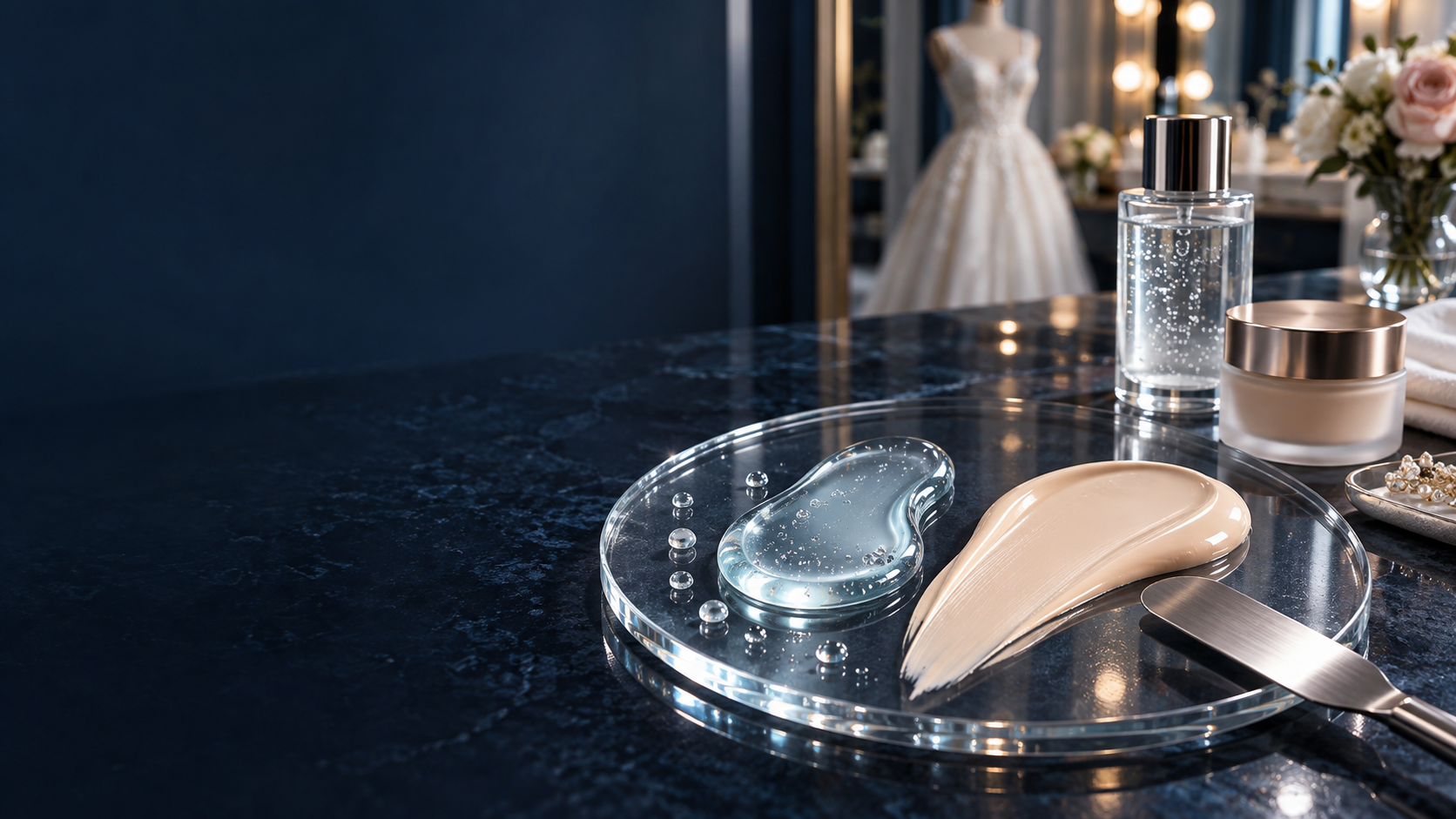
A bridal base is a system—not a label.Water-based vs silicone-based makeup
Learn why foundation pills, separates, cakes or slides—and what a professional wear test can reveal before the wedding day.Start with the useful truth
Most modern foundations cannot be understood from one ingredient.
Water may appear first in both a fluid skin tint and a silicone-rich long-wear foundation.
The label ‘water-based’ or ‘silicone-based’ is a useful shortcut, but it does not tell the complete story. Water can appear first on the ingredient list of many formulas that still rely heavily on silicones for slip, blurring, film formation or wear.
A bridal base succeeds when skin preparation, primer, foundation, concealer, powder and setting products work as one system. Application amount, drying time, skincare residue, skin condition and wedding weather can matter as much as the headline ingredient family.
Pilling is usually a friction or layering problem: too much product, incompatible films, insufficient absorption time or repeated rubbing can roll product into tiny flakes. Separation is different—the base breaks apart, gathers around texture or loses adhesion as oil, sweat or excess emollient moves through it.
The most reliable answer is not a viral compatibility rule. It is a controlled wear test using the bride’s actual skincare, selected complexion products and realistic lighting, heat and timing.
Compare without oversimplifying
Two useful starting clues. Neither is a verdict.
Texture, skin feel and wear are created by the whole formula. These cards help you ask better questions rather than prescribe a universal pairing rule.
Water-led formulas
Often fluid and easy to spread, but they may still contain silicones, oils, powders and film-formers. ‘Water first’ does not mean ‘silicone free’. Your skin prep and the complete formula decide the finish.
- Aqua / water often appears first
- Can be natural, dewy or matte
- May suit thin, buildable application
Silicone-rich formulas
Silicones can improve glide, blur the appearance of texture and help a base form an even film. They do not automatically make a product heavy, pore-clogging or suitable for every skin type.
- Look for dimethicone or siloxanes
- Can feel silky or softly blurring
- Still needs compatible preparation
Technique changes performance
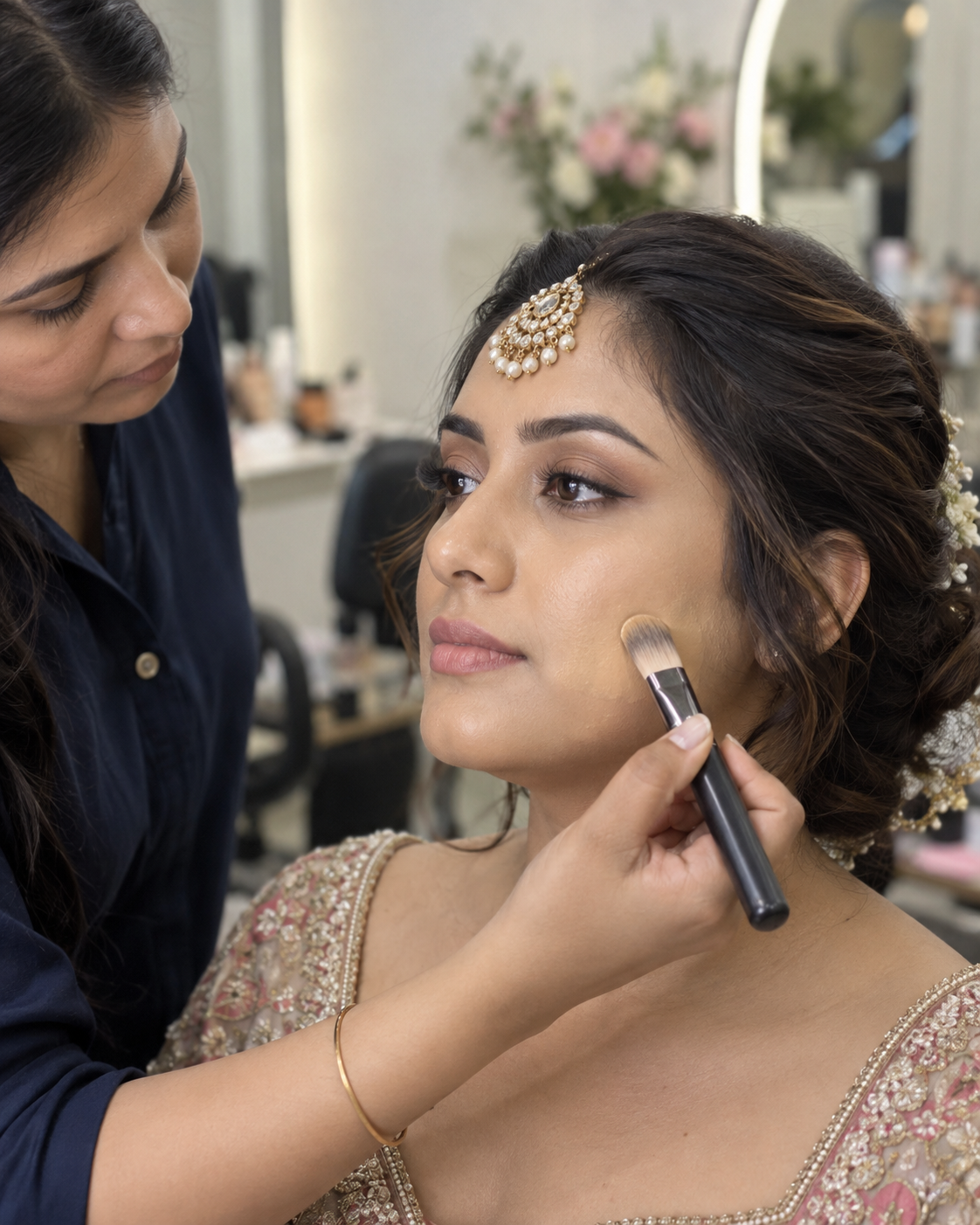
Thin, deliberate layers usually outperform one heavy correction layer.
Primer cannot repair every preparation problem, and powder cannot solve every wear problem. The artist controls placement, pressure, quantity and drying time so the base can form an even, flexible film.
Coverage should be built only where needed. This preserves movement around the eyes, nose and mouth and reduces the amount of product that can gather in expression lines.
Plan a meaningful makeup trialDiagnose before you add product
Five base problems that are often confused with one another
The symptom matters. Treating pilling, separation and dehydration as the same issue can make the finish worse.
Tiny rolls or flakes appear while blending
Too much product, repeated rubbing, layered film-formers or insufficient settling time
Reduce layers; allow each step to settle; press instead of repeatedly rubbing
Pigment breaks apart or gathers into islands
Oil, sweat, excess emollient, weak adhesion or too much foundation
Blot first; use less base; test preparation and setting as one system
Some areas grip while others look bare
Uneven exfoliation, dry patches, spot application or foundation setting too quickly
Prepare texture gently; work in small zones; avoid overworking drying product
Texture becomes thick, dry or powdery
Excess coverage, too much powder or repeated correction layers
Use targeted concealer; set strategically; remove buildup before adding more
The base moves, transfers or disappears
Over-rich prep, heat, sweat, facial movement or insufficient film formation
Simplify prep; use thin layers; test transfer and heat resistance before the event
How to read the label
Use ingredient order as context—not a compatibility calculator.
Retail cosmetic ingredients are generally listed in descending order of predominance, with exceptions for ingredients at one percent or less and colour additives. That makes the upper portion of the list informative, but it does not reveal exact percentages or predict the final film on skin.
FDA cosmetic ingredient naming guidance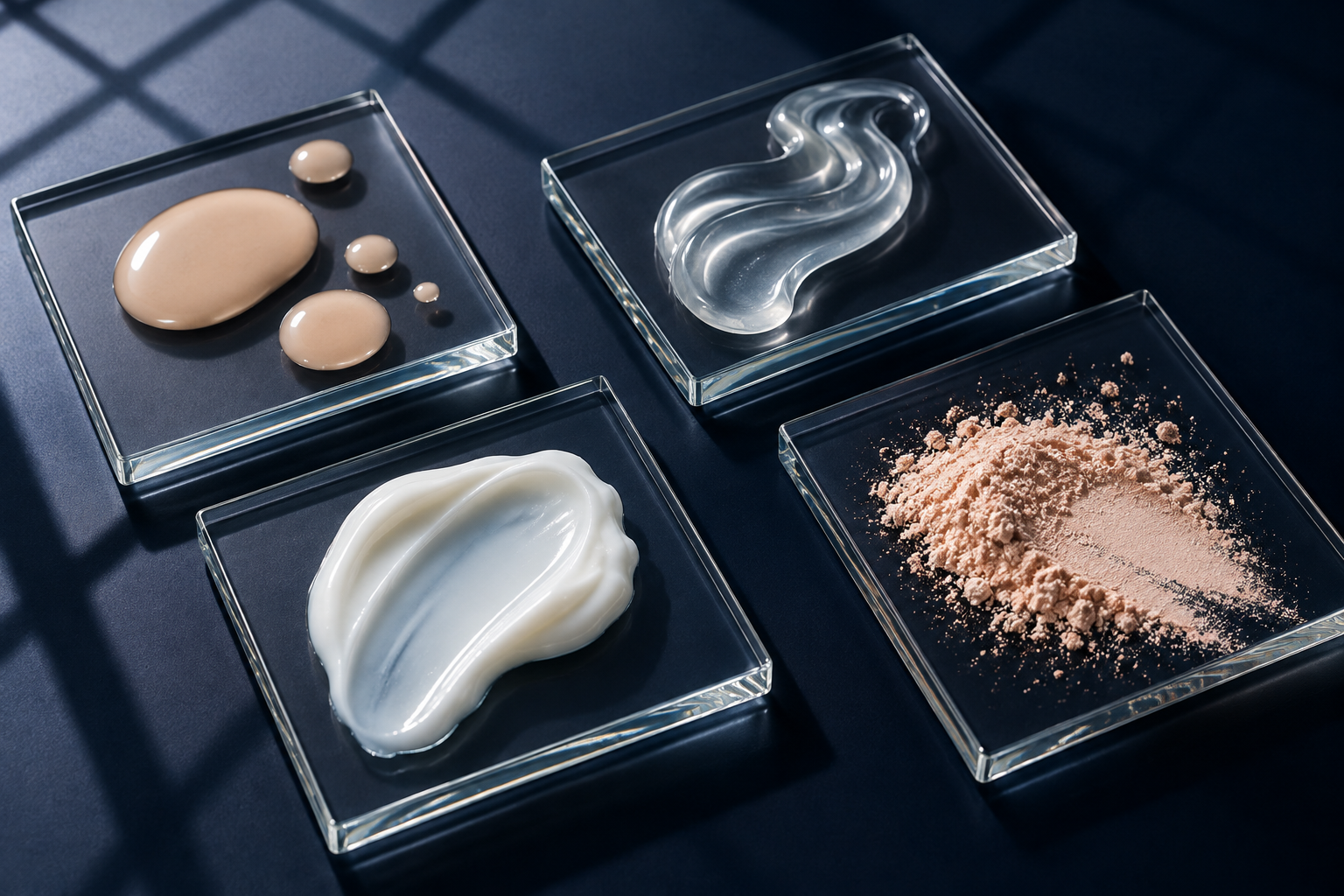
A repeatable four-step protocol
Test the routine—not isolated products on the back of a hand.
The goal is not to prove that one formula family is superior. It is to identify a comfortable, camera-ready system that behaves predictably on your skin.
- 01
Document the routine
Write down the exact cleanser, moisturiser, sunscreen, primer, base and setting products. A successful result must be repeatable.
- 02
Apply in thin zones
Compare one controlled layer with targeted correction. More product can hide discolouration briefly while reducing flexibility later.
- 03
Wait before judging
Observe the base after it settles, not only during application. Check the nose, mouth, jaw and under-eye area after normal facial movement.
- 04
Test the real conditions
Review daylight, indoor light and flash; then add time, warmth and gentle blotting. A wedding base must work beyond the studio mirror.
Choose by condition and finish
Skin type starts the conversation. Current skin condition completes it.
Prioritise controlled preparation, flexible thin layers, strategic powder and transfer testing. Do not remove all hydration automatically.
Address flakes and tightness early, then avoid a last-minute heavy emollient layer that may weaken adhesion. Set only where needed.
Use gentle preparation and targeted correction. Formula choice should also respect sensitivity, prescribed skincare and known triggers.
Treat zones differently. The centre of the face may need control while the perimeter benefits from less powder and more flexible preparation.
Clear answers
Water- and silicone-based makeup FAQs
01Is water the first ingredient in every water-based foundation?
Water or aqua often appears near the beginning, but that alone does not define the complete formula. Many foundations list water first and also contain silicones, oils, waxes, powders and film-forming ingredients that strongly influence texture and wear.
02How can I recognise silicones on a makeup label?
Common examples include dimethicone, cyclopentasiloxane, cyclohexasiloxane and ingredients ending in forms such as -siloxane or -cone. One ingredient name cannot predict the entire performance of a finished formula, so treat the list as a clue rather than a guarantee.
03Must a water-based primer be paired only with water-based foundation?
No. The popular ‘match the bases’ rule is too simple because many modern products are emulsions containing both water and silicones. Thin layers, absorption time and an actual patch or wear test are more dependable than categorising from one ingredient.
04Why does foundation pill over skincare?
Common causes include applying too much skincare, layering several film-formers, not allowing sunscreen or moisturiser to settle, rubbing repeatedly, or applying a new layer before the previous one has formed evenly.
05Why does bridal makeup separate around the nose and mouth?
Those areas move frequently and can produce oil or perspiration. Heavy moisturiser, excess foundation, insufficient setting, repeated touching and an unsuitable preparation routine can all contribute. The solution should be tested rather than corrected with more powder automatically.
06Is silicone-based foundation always better for oily skin?
No. Silicone-rich textures can feel smoothing and help some oily skins, but finish, film-formers, powder balance, skincare and application technique determine wear. A lightweight water-led formula can also perform well when the full routine is appropriate.
07Can dry skin wear a long-lasting silicone-based base?
Yes, if preparation restores comfort and the complexion products are applied in thin flexible layers. Dry patches should be addressed before makeup; adding a heavy oily layer immediately before foundation can create a different adhesion problem.
08What should a bride test before approving her base?
Check the exact skincare and sunscreen, shade in daylight, close-up texture, flash photography, transfer, comfort, smile-line movement and wear for several hours. Record what was used so the successful routine can be repeated.
Bring your routine—not only inspiration photos.