
Makeup education
Colour corrector vs concealer
How to cover dark circles without a grey finish.
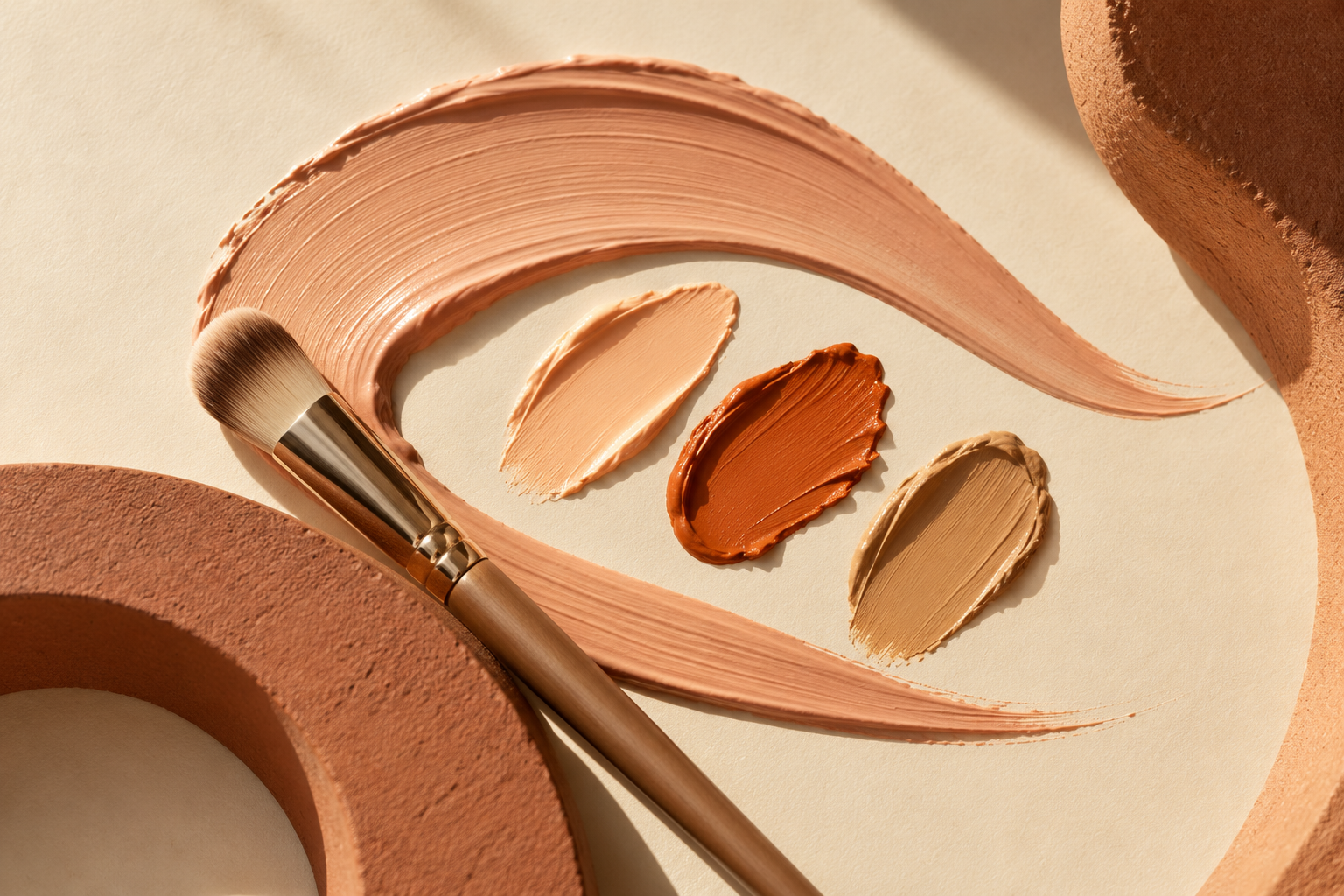
01 / Understand the difference
Colour first. Coverage second.
A colour corrector changes how unwanted tones appear; concealer adds skin-toned coverage. You may need one, both, or neither. The aim is a balanced under-eye that still looks like skin.
Start with the colour you actually see and the depth of your complexion. A universal orange-for-everyone rule can leave a visible warm patch that needs more concealer to hide.
- Colour corrector
- A peach, pink, orange or other tinted product used selectively to balance the appearance of discolouration.
- Concealer
- A skin-toned product that adds coverage and brings the corrected area back into balance with the surrounding complexion.
Try concealer alone first. If a thin application gives the finish you like, there is no reason to add another layer. Correction is useful when a visible blue, purple, brown or grey cast still influences the finished colour.
02 / Choose by what you see
Peach or orange? Depth matters as much as hue.
Look in indirect daylight with your face relaxed. Check the inner corner and the darker crescent separately: the whole under-eye may not need the same amount of coverage. Skin depth, the intensity of the discolouration and the pigment strength of the product all affect the choice.
Soft peach
A starting point for lighter complexions or less intense darkness. It should soften the unwanted cast without leaving an obvious peach patch.
Rich orange
May work better on deeper complexions or more pronounced discolouration. A very saturated orange can be excessive on lighter skin.
Skin-matched concealer
Brings coverage back towards the surrounding skin. Start close to your complexion before deciding whether extra brightness is needed.
These are starting points, not fixed rules for Indian skin. Brands use different shade names and pigment strengths. Some ranges also offer pink or bisque correctors. Compare small amounts beneath your chosen concealer and judge the finished combination.
03 / Build the finish gently
The light-layer method.
Prepare, then pause.
Use a modest amount of your usual suitable moisturiser and allow it to settle. If the area is still slippery, adding makeup immediately may encourage movement.
Place correction only on the darkness.
Start with a tiny amount and tap it onto the discoloured area with a clean small brush or fingertip. Keep it away from the eye itself. Soften the edges rather than spreading it into a large triangle.
Press concealer over the top.
Add a thin layer close to your skin tone. Gentle pressing helps retain the targeted correction underneath; repeated sweeping can move both products. Check the result before adding another layer.
Check movement before powder.
Look up, smile and relax the face. Lightly smooth any product already gathering in a line. If setting is needed, use a small amount of powder where it helps rather than coating the entire area heavily.
Review in two lights.
Check indirect daylight and your event lighting. For bridal makeup, include photographs with and without flash and review the finish again after normal wear.
Follow each product’s directions, particularly around the eyes. A new combination is best tested ahead of an important event so there is time to adjust shade, amount and preparation.
04 / Read the result
If the finish looks wrong, change one thing.
| What you notice | What to check |
|---|---|
| Grey or ashy | Compare a concealer closer to your skin depth and undertone. If darkness still shows through, try a small amount of suitable corrector. |
| Orange showing through | Reduce the amount or saturation of the corrector. Avoid solving a strong orange patch by piling on a much lighter concealer. |
| Thick or dry texture | Reassess preparation and reduce the total quantity of cream and powder. More coverage can make existing texture more visible. |
| Product gathers in lines | Use less product in the moving areas and check whether your preparation is too rich. Natural lines can remain visible. |
| A shadow remains | Change the light angle. If the shadow changes with it, under-eye shape may be contributing; makeup cannot flatten a hollow. |
05 / Take it into your bridal trial
Test the finished face, not just the swatch.
For a wedding in Lucknow, under-eye makeup should work with the foundation, eye look, photography and event schedule. An intensely bright under-eye may look disconnected once the full face is complete, even if it appears attractive in a close-up phone preview.
Bring your usual skincare details and a reference for the finish you prefer. Ask to compare the face in daylight, indoor light and flash. Note whether the coverage remains comfortable after smiling and talking, and whether touch-ups improve it without building texture.
At AS Glam Makeup Studio in Indira Nagar, Lucknow, you can discuss your preferred coverage and bridal look during your consultation. The aim is a balanced result that suits your complexion and photographs naturally.
A few useful answers
Before you add another layer.
Do I need corrector and concealer for dark circles?
Not always. A skin-matched concealer may provide enough coverage on its own. Add a small amount of corrector only if the discolouration still shows through or the result looks ashy.
Should I use peach or orange corrector?
Peach can be a useful starting point for lighter skin or less intense discolouration. A richer orange may suit deeper skin and stronger darkness. Compare a tiny amount under concealer; colour names vary between brands.
Does corrector go before concealer?
Usually, yes. Tap corrector onto the area of discolouration, soften the edge, and add a thin layer of concealer without sweeping the corrector away. Follow the directions for your particular products.
Why does my concealer look grey?
The concealer may be too light, have an unsuitable undertone, or leave underlying darkness visible through the coverage. Compare a closer skin match before adding more product or a stronger corrector.
Can corrector remove under-eye hollows?
Makeup can change the appearance of colour, but it cannot remove a hollow or change the structure of the under-eye. Shadows that change with lighting may remain even after careful coverage.
Can I prevent every under-eye crease?
Natural movement and lines can still show. Thin layers, modest preparation and selective powder can help reduce product gathering, but no technique guarantees a completely crease-free under-eye.
From the journal
Keep your base in balance.
AS Glam Makeup Studio · Lucknow
A little correction.
A more considered finish.
Let’s plan the coverage, colour and comfort for your occasion.